Are Dermal Fillers Safe? What to Ask Before Your Appointment in Draper, Utah

Dermal fillers are generally well tolerated when an FDA-approved product is injected by a licensed, experienced provider. Most side effects are mild and temporary, such as swelling, bruising, and tenderness that fade within days. Serious complications are rare but real, which is why the person holding the syringe, the product they use, and how prepared they are to manage problems matter far more than price or convenience.
Fillers have become one of the most popular non-surgical treatments, and that popularity has brought a flood of social media videos, at-home "hacks," and pop-up offers. If you are considering fillers for your lips, cheeks, under-eyes, or jawline, here is a clear look at what is normal, what is not, and the questions worth asking before anyone injects you.
What Side Effects Are Normal After Dermal Fillers?
Some reaction at the injection site is expected. The FDA's overview of dermal fillers lists common risks including bruising, redness, swelling, pain, tenderness, itching, and rash. The FDA's consumer guide to dermal filler do's and don'ts notes that swelling and bruising usually appear soon after injection and often fade within days to weeks.
At True Medical Spa, patients are told that mild swelling or bruising can occur and typically resolves within days. Lips tend to swell more noticeably than other areas because the tissue is soft and highly vascular, so a little extra fullness in the first few days is common.
Normal reactions tend to improve steadily each day. That pattern is one of the simplest ways to tell routine healing from something that needs attention.
What Are the Rare but Serious Risks?
The FDA identifies unintentional injection into a blood vessel as the most concerning risk associated with dermal fillers. When filler blocks blood flow, complications can include tissue death, vision problems including blindness, and stroke, and some of these effects can be permanent. Severe allergic reactions are also listed among rare risks.
These events are uncommon, but they are the reason filler injection is a medical procedure. A skilled injector understands facial anatomy, knows which areas carry higher risk, uses careful technique, and recognizes early warning signs.
Contact your provider right away or seek urgent care if you notice:
- Severe or worsening pain rather than mild tenderness
- Skin that turns white, gray, blue, or mottled near the treated area
- Any change in vision
- Signs of infection such as spreading redness, warmth, or fever
Why Do Needle-Free Pens and Online Fillers Worry Experts?
This is one of the biggest safety issues facing younger patients today. Gen Z and younger adults are more likely to encounter needle-free "hyaluron pens" and do-it-yourself filler kits through social media, often marketed as a cheaper or gentler shortcut.
The FDA is direct about this. It states that needle-free devices are not approved by the FDA for injecting dermal fillers and advises people not to inject themselves with fillers or with needle-free injection pens. The FDA also warns against buying dermal filler products online or from sources selling directly to the public, since they could be counterfeit or contaminated.
If an offer seems unusually cheap, happens outside a medical setting, or involves a product you cannot verify, treat that as a red flag rather than a bargain.
What Should You Ask Before You Book?
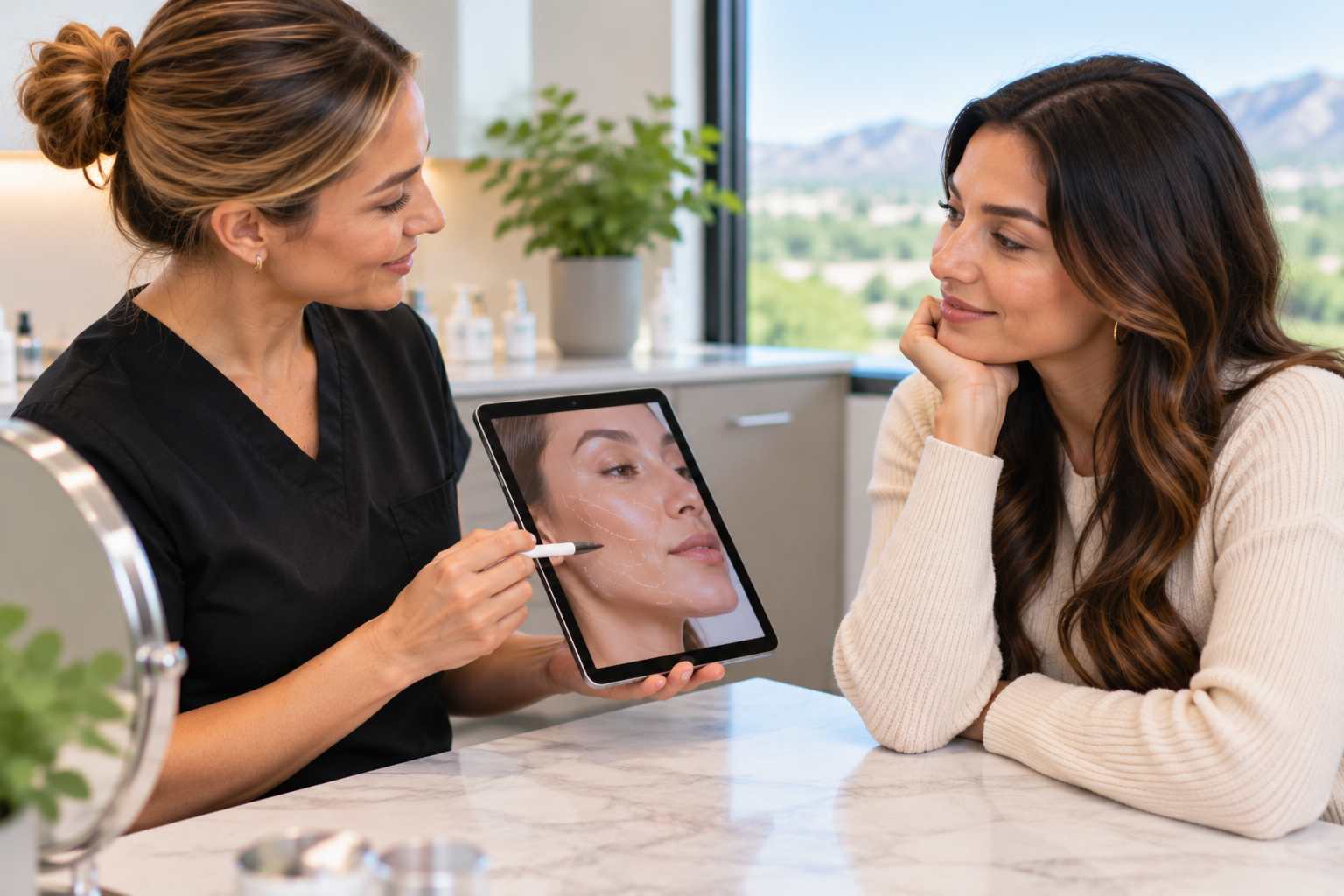
A good consultation should feel like a conversation, not a sales pitch. The FDA recommends working with a licensed health care provider who is experienced in injecting dermal fillers and suggests asking about the product, its risks, and where it will be injected. Questions worth asking include:
- What product do you plan to use, and is it FDA-approved for this area?
- What are the possible risks for the area I want treated?
- What training and experience do you have with fillers and with managing complications?
- How do you decide how much product to use?
- What should I watch for afterward, and how do I reach you if something feels wrong?
You can also ask for the patient labeling for an FDA-approved filler. At True Medical Spa, you can learn about the clinical team on the About page, which lists RN injectors and a PA-C medical director.
Be ready to share your own information too, including medications, supplements, allergies, past filler or neurotoxin treatments, and any history of cold sores or autoimmune conditions. Your provider will use this to decide whether treatment is appropriate and when.
What If You Are Unhappy With Your Filler Result?
It is normal to feel unsure in the first few days, when swelling can make treated areas look fuller or uneven. Most providers recommend waiting until swelling has settled, often around two weeks, before judging the final result.
If something still looks off after that, start by contacting the provider who treated you. Small asymmetries can often be refined at a follow-up visit. Many hyaluronic acid fillers can also be dissolved with an enzyme when a qualified provider decides it is appropriate, which is one reason product choice and documentation matter. Ask at your consultation what type of filler is being used and what your options would be if you wanted to adjust or reverse it.
What you should avoid is trying to fix a result yourself by massaging, pressing, or seeking a quick correction from someone who does not know what was injected. Clear records and an ongoing relationship with your injector make any adjustment safer.
How Do Different Clients Think About Filler Safety?
Safety priorities can look a little different depending on your stage of life and goals.
Gen Z and Younger Adults
For younger patients, the most important safety decision is often where to go, not which product to choose. Starting in a medical setting with a conservative plan protects both your health and your long-term facial balance.
Luxury and High-End Clients
Clients who prioritize premium care tend to focus on the injector's experience, the consultation process, and the plan for follow-up. Paying more does not guarantee safety, but choosing a provider based on credentials and judgment rather than discounts usually reflects the right priorities.
Men
Men often seek fillers for structure, such as jawline definition, rather than volume. True Medical Spa notes its dermal fillers can refine the jawline and balance proportions. Male anatomy differs from female anatomy, so ask your provider how they adapt placement to keep results masculine.
Women Addressing Volume Loss
Many women start considering fillers when cheeks begin to flatten or lines deepen with age. A thoughtful provider will look at the whole face and may recommend fewer syringes placed strategically rather than chasing every line.
How Does True Medical Spa Approach Fillers?
The spa's dermal filler treatments are designed to lift and define cheeks, refine nasolabial folds, smooth under-eyes, enhance lips, and refine the jawline. Product selection is matched to each area's needs for structure, softness, or flexibility, and the spa describes its approach as conservative and proportion-focused to keep results elegant and believable. Depending on the product and area, results may last 6 to 12 months or longer.
Fillers are not the only option. If you want gradual, collagen-driven improvement rather than immediate volume, the spa also offers biostimulators, which prompt your skin to produce collagen over time. Your provider can explain which approach fits your goals and comfort level.
Frequently Asked Questions
Are dermal fillers safe?
When an FDA-approved product is injected by a licensed, experienced provider, fillers are generally well tolerated. Common side effects are mild and temporary, while serious complications are rare but possible.
How long does swelling last after dermal fillers?
The FDA notes swelling and bruising usually appear soon after injection and often fade within days to weeks. At True Medical Spa, mild swelling or bruising typically resolves within days.
Are needle-free filler pens safe?
The FDA states that needle-free devices are not approved for injecting dermal fillers and advises against using them, including injecting yourself with these pens.
How long do dermal fillers last?
Depending on the product and treatment area, results may last 6 to 12 months or longer. The FDA notes that the effects of most FDA-approved fillers are temporary because the body gradually breaks them down.
Can dermal fillers be combined with neurotoxins?
Yes. True Medical Spa notes that combination treatments often enhance balance and longevity. Your provider will recommend the right sequence and timing.
Safety Is the Real Glow-Up
The most beautiful filler result is one that looks natural and was delivered safely. Asking good questions, choosing a qualified provider, and knowing which symptoms deserve a call are small steps that make a big difference.
If you are weighing fillers and want honest answers about risks and results, visit the True Medical Spa homepage or book a consultation in Draper to talk through a plan built around your face and your comfort level.