Not All Acne Scars Are the Same, and That Changes Everything About Treating Them

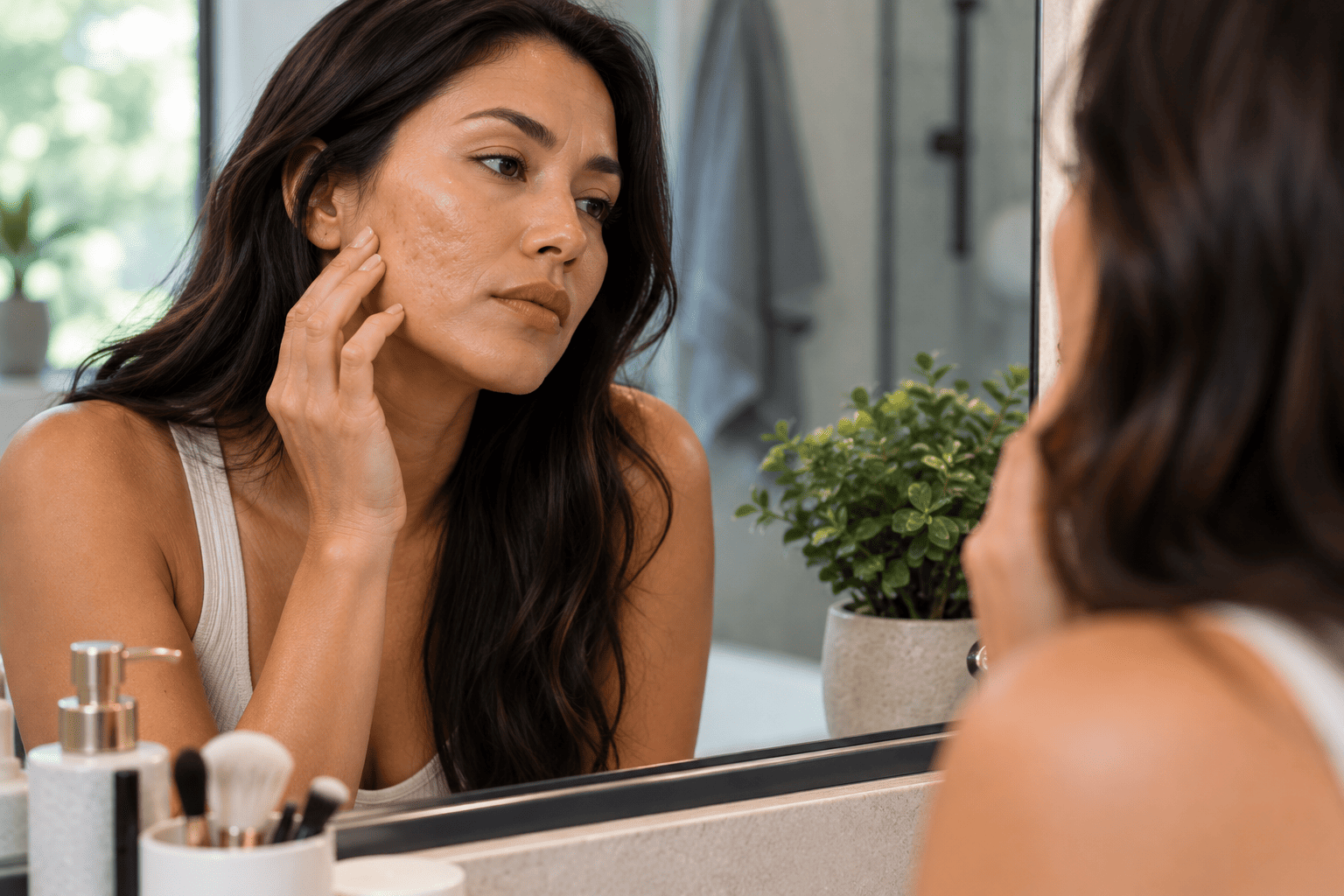
If you have ever tried a product or treatment for acne scars that simply did not work, there is a good chance the issue was not the treatment itself. It was the mismatch between the treatment and the specific type of scar you were actually dealing with. Acne scarring is not one uniform thing. It comes in several distinct forms, each caused by a different kind of skin damage, and each responding best to a different kind of care.
Before figuring out how to get rid of acne scars, it helps to understand which kind you actually have. Once that is clear, the rest of the decision becomes much more straightforward.
Why Do Acne Scars Form in the First Place?
Acne scarring happens when inflammation from a breakout damages the deeper layers of skin, disrupting the normal production of collagen during healing. Severe or cystic acne is more likely to leave lasting scars than milder breakouts, since the inflammation reaches deeper into the skin. According to information published by the American Academy of Dermatology, how a person's individual skin heals, along with how quickly a breakout is treated, also plays a significant role in whether scarring develops at all.
What Are the Different Types of Acne Scars?
There are four main categories, and distinguishing between them is the single most useful thing you can do before choosing a treatment path.
What Are Icepick Scars?
Icepick scars are narrow, deep, and pitted, often resembling small puncture marks in the skin. They form when inflammation destroys tissue in a concentrated, narrow column, which makes them some of the more difficult scars to treat because of their depth.
What Are Boxcar Scars?
Boxcar scars are broader than icepick scars, with defined, somewhat rectangular edges and a flatter base. They tend to form after conditions like chickenpox or more widespread inflammatory acne and give the skin a slightly pitted, uneven appearance.
What Are Rolling Scars?
Rolling scars create a wave-like unevenness in the skin, without sharply defined edges. They occur when fibrous bands form beneath the skin's surface, tethering the skin above to deeper tissue and creating a rolling, uneven texture rather than distinct pits.
What Are Hypertrophic or Keloid Scars?
Unlike the three types above, which all involve a loss of tissue, hypertrophic and keloid scars are raised. They form when the body produces excess collagen during healing, creating a firm, raised area rather than a depression. These are less common with acne specifically but can occur, particularly on the jawline, chest, or back.
How Can You Tell Which Type of Scar You Have?
Standing at an angle to natural light and gently stretching the skin can sometimes make the type of scarring more apparent, since pitted scars often become more visible under angled lighting while raised scars remain visible regardless of angle. That said, an accurate assessment from a trained provider is far more reliable than trying to self diagnose, especially since many people have a combination of scar types rather than just one.
What Determines How to Get Rid of Acne Scars Effectively?
The right approach depends heavily on which category of scarring is present, how deep it is, and how much of the face or body is affected.
Does Skincare Alone Get Rid of Acne Scars?
Topical products, including those with retinoids or vitamin C, can improve overall skin tone and support collagen health, but they generally cannot resolve textural scarring like icepick, boxcar, or rolling scars, since these involve deeper structural changes that surface level products cannot reach. Skincare is a reasonable supportive step, but it is rarely a complete solution on its own for established scarring.
Which Professional Treatments Work Best for Textural Scarring?
For pitted or rolling scars, treatments that stimulate deeper collagen remodeling tend to be most effective. At True Medical Spa, microneedling and SkinPen treatments use fine needles to create controlled micro-injuries that trigger the skin's natural healing and collagen production process, which can gradually improve the appearance of boxcar and rolling scars over a series of sessions. For clients looking for an added regenerative boost, microneedling with exosomes combines this same mechanism with additional cellular signaling support.
Chemical peels offer another route, particularly for more superficial textural irregularities and associated discoloration, by encouraging controlled exfoliation and renewed skin turnover.
What About Deep Icepick Scars Specifically?
Because icepick scars extend deeper into the skin, they often require a more sustained treatment series compared to shallower boxcar or rolling scars. A provider will typically recommend a longer term plan combining repeated microneedling sessions with patience, since deep textural change takes multiple healing cycles rather than a single visit.
How Many Treatments Does It Usually Take?
This varies significantly based on scar depth and type, but most microneedling based treatment plans for acne scarring involve a series of sessions spaced about four to six weeks apart, allowing the skin adequate time to rebuild collagen between treatments. Visible improvement often builds gradually over several months rather than appearing after a single session.
Can New Acne Scars Be Prevented While Treating Old Ones?
Yes, and this matters more than people often realize. If active breakouts are still occurring while old scars are being treated, new scarring can form at the same time treatment is addressing existing marks. Managing active acne, whether through a dermatologist, a consistent skincare routine, or professional treatment, is an important parallel step for anyone serious about improving their skin's overall texture long term.
Scar Tissue Has a Type, and So Does the Fix
Getting rid of acne scars is rarely about finding one miracle product or treatment. It is about correctly identifying what kind of scarring you are actually working with and matching it to an approach designed for that specific texture and depth. Icepick, boxcar, rolling, and raised scars all tell a slightly different story about how your skin healed, and that story determines what will actually move the needle.
If you are in Draper and have been trying to figure out which treatment path makes sense for your skin, our team at True Medical Spa can help assess your specific scarring and build a plan around it. Explore our full range of services or reach out to schedule a consultation to get started.
This article was updated in August 2026 to reflect current treatment approaches and information.
Frequently Asked Questions
Which type of acne scar is hardest to treat? Icepick scars are generally considered the most challenging due to their depth and narrow shape, often requiring a longer treatment series compared to other scar types.
Can I have more than one type of acne scar at the same time? Yes, it is common to have a mix of icepick, boxcar, and rolling scars, which is why a professional assessment is helpful before starting treatment.
Does microneedling work for all types of acne scars? Microneedling is particularly effective for boxcar and rolling scars and can help with shallower icepick scars, though very deep icepick scars sometimes require a longer treatment timeline.
How long does it take to see results when treating acne scars? Most people begin noticing gradual improvement over two to three months as collagen rebuilds, with continued improvement over a full treatment series.
Is it possible to get rid of acne scars completely? Significant improvement is achievable for most types of scarring, though complete elimination varies by scar depth and individual healing response.