Is That Actually a Scar? The Mark Left Behind by Acne Isn't Always What You Think

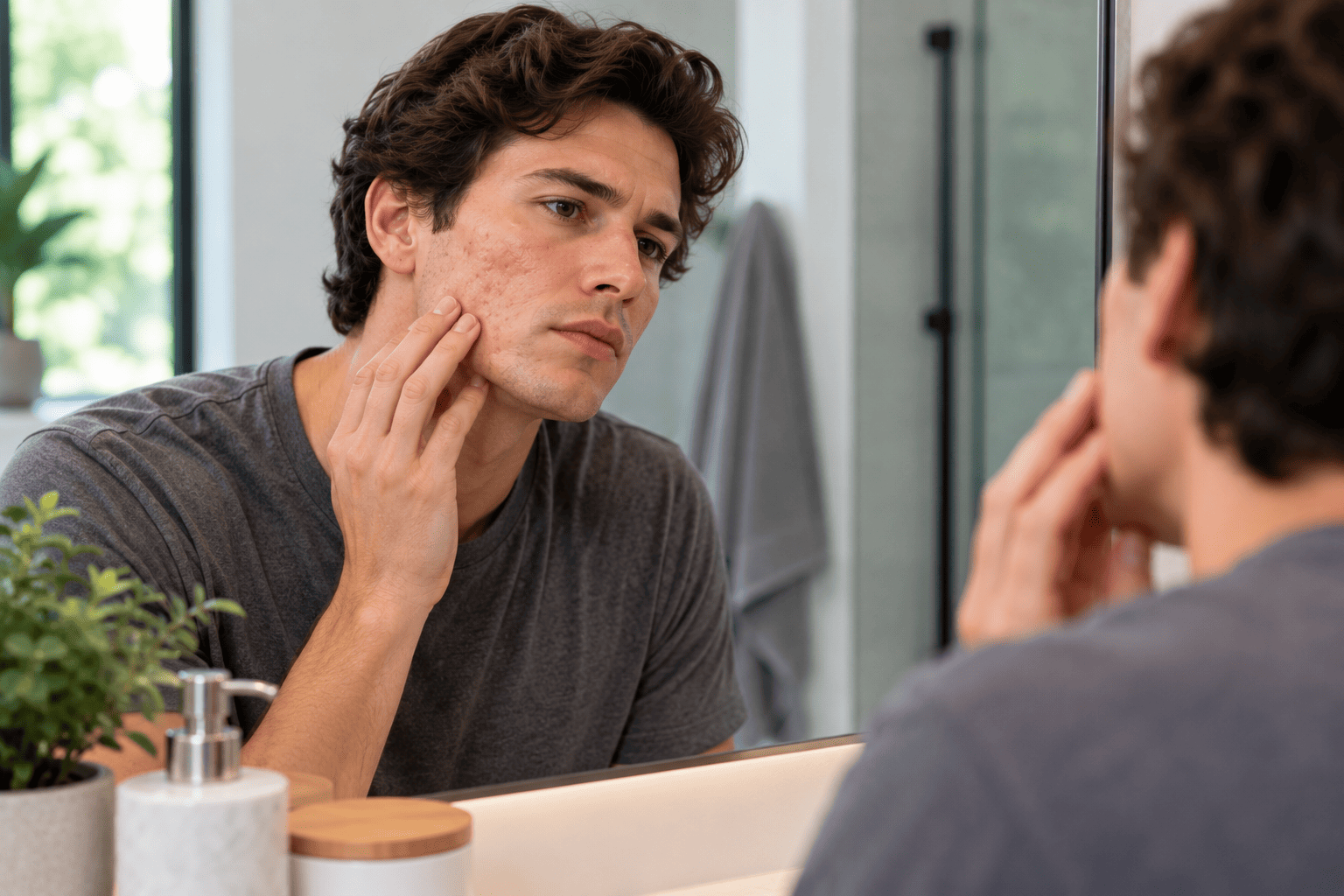
A breakout clears up, but the mark it leaves behind sticks around for weeks, sometimes months. It is easy to assume this is scarring and start hunting for a way to fix it immediately. But here is something worth knowing before spending time and money on the wrong treatment. Not every mark left by acne is actually a scar, and treating a flat discoloration the same way you would treat a textured scar rarely gets the results people are hoping for.
Understanding this distinction is the real starting point for anyone wondering how to remove acne scars and actually seeing results instead of spinning in circles.
What Is the Difference Between a Dark Mark and an Actual Scar?
This is the single most important question to answer before choosing a treatment.
What Is Post-Inflammatory Hyperpigmentation?
The flat, discolored mark that often appears after a pimple heals is typically post-inflammatory hyperpigmentation, sometimes shortened to PIH. It happens when inflammation triggers excess melanin production in the healing skin, leaving behind a flat brown, red, or purplish mark depending on skin tone. Importantly, this is a pigment issue, not a structural one. The skin's texture underneath is usually still smooth.
What Makes Something a True Acne Scar?
True acne scarring involves an actual change in the skin's texture, whether that is a depressed pit, a rolling unevenness, or in some cases a raised area. This happens when the deeper healing process is disrupted and collagen production during recovery is either insufficient or excessive, leaving a permanent structural change rather than just a temporary color shift.
How Can You Tell the Two Apart?
A simple way to check is to run your fingers gently over the area with your eyes closed. If the skin feels smooth and level despite the visible discoloration, you are likely dealing with pigment rather than a texture based scar. If you can feel a dip, ridge, or bump, that points toward true scarring.
Does Post-Inflammatory Hyperpigmentation Go Away on Its Own?
In many cases, yes, though the timeline varies. According to information published by the American Academy of Dermatology, PIH can take anywhere from several months to over a year to fade naturally, and the process tends to be slower in people with deeper skin tones. Sun exposure can also darken these marks further and prolong how long they stick around, which is why consistent sunscreen use is often the first recommendation for anyone dealing with post-acne discoloration.
Do True Acne Scars Fade on Their Own Over Time?
Generally, no, or at least not significantly. Because true scarring involves an actual structural change in the skin, it typically does not resolve without some form of intervention. This is the key distinction that determines whether patience is a reasonable strategy or whether it is time to look into professional treatment.
How Do You Remove Acne Scars That Involve Actual Texture Change?
Once true textured scarring is confirmed, the approach shifts toward treatments that stimulate collagen remodeling at a deeper level.
Which Treatments Help With Textured Acne Scarring?
At True Medical Spa, microneedling and SkinPen treatments create controlled micro-injuries that prompt the skin to rebuild collagen in a more organized way, gradually smoothing pitted or uneven texture over a series of sessions. For an added regenerative element, microneedling with exosomes pairs the same mechanism with additional support for the skin's natural repair process.
Are There Options for Both Discoloration and Texture Together?
Many people are dealing with a combination of both lingering pigment and some degree of texture change, which is common after more significant breakouts. Chemical peels can help address surface discoloration and encourage smoother, more even toned skin, and are sometimes used alongside microneedling based treatments as part of a broader plan. For general concerns tied to hyperpigmentation, a provider can help determine which combination of treatments fits your specific skin.
How Long Does It Take to See Results From Scar Treatment?
Because collagen remodeling is a gradual biological process, most people begin noticing meaningful improvement over two to three months, with continued improvement through a full treatment series. This is very different from the timeline for fading pigment, which can sometimes visibly lighten within weeks of consistent sun protection and, when appropriate, professional treatment.
Should You Treat Active Acne Before Addressing Scars or Marks?
Yes, and this is a step people frequently skip. Treating existing marks while new breakouts are still occurring means new marks or scars can form at the same rate old ones are improving. Getting active acne under control, whether through a dermatologist or a consistent skincare and treatment plan, puts you in a much better position to see lasting results from scar focused treatment.
When Should You See a Professional Instead of Waiting It Out?
If a mark has remained unchanged for well over a year, if you can feel a textural change when touching the area, or if the marks are affecting your confidence enough that waiting no longer feels worth it, that is a reasonable point to seek a professional opinion. A trained provider can quickly determine whether you are dealing with lingering pigment, true scarring, or a combination of both, and can point you toward a plan that actually matches what is happening in your skin.
Case Closed: What Your Skin Has Been Trying to Tell You All Along
The mark left behind by a breakout is not always permanent, and it is not always the same kind of problem people assume it is. Some marks fade with time and sun protection. Others involve a real structural change that benefits from a more targeted approach. Knowing which one you are dealing with saves time, money, and a fair amount of frustration.
If you are in Draper and are not sure whether what you are seeing is fading pigment or a true scar, our team at True Medical Spa can help you figure it out and map out next steps. Take a look at our full range of services or contact us to schedule a consultation whenever you are ready.
This article was updated in August 2026 to reflect current treatment approaches and information.
Frequently Asked Questions
How long does post-inflammatory hyperpigmentation usually last? It can take anywhere from several months to over a year to fade naturally, depending on skin tone and sun exposure, though it often responds well to sunscreen and targeted treatment.
Can I have both dark marks and true scarring at the same time? Yes, this is common after more significant or repeated breakouts, and it often calls for a combined treatment approach addressing both pigment and texture.
Is sunscreen really important for fading acne marks? Yes. Sun exposure can darken post-inflammatory marks and significantly slow how quickly they fade, making daily sunscreen one of the simplest supportive steps.
Does microneedling help with dark marks or only texture? Microneedling is primarily effective for textural scarring. Dark marks from pigment typically respond better to treatments like chemical peels alongside sun protection.
How do I know if I need professional treatment for acne marks? If a mark has not changed after a year, feels different in texture when touched, or is affecting your confidence, it is a reasonable time to consult a professional.