Can a Chemical Peel Fade Melasma and Sun Spots? What Draper, Utah Skin Really Needs

Updated October 2026
Chemical peels can lighten sun spots and help improve melasma, but the two respond differently. Sun spots often fade well with a series of peels and consistent sun protection. Melasma is more stubborn: it tends to be long-lasting, can return with sun or heat exposure, and usually needs a careful, multi-step plan in which a peel plays one supporting role. Knowing which type of discoloration you have is the first step toward choosing the right treatment.
If you have been layering on brightening serums and still see patchy brown areas in the mirror, you are not alone. Here is how chemical peels fit into treating dark spots, why Draper's sunny climate changes the strategy, and what to ask before you book.
Is It Melasma, Sun Spots, or Something Else?
These terms get used interchangeably, but they describe different patterns.
Sun spots, sometimes called age spots or liver spots, are small, defined brown spots that appear on areas that see the most sun: the cheeks, nose, forehead, hands, and chest. They reflect years of cumulative UV exposure and tend to multiply over time.
Melasma usually shows up as larger, blotchy patches, often symmetrical, across the cheeks, forehead, upper lip, or bridge of the nose. According to the American Academy of Dermatology, melasma may fade on its own when a trigger such as pregnancy or a certain medication is removed, but otherwise it can last for years or even a lifetime. Sunlight causes skin to produce more pigment, which can darken existing melasma and trigger new patches.
There is a third common type: the dark marks left behind after a breakout, called post-inflammatory hyperpigmentation. Because each type behaves differently, a professional skin assessment is worth more than any guesswork.
How Do Chemical Peels Lighten Dark Spots?
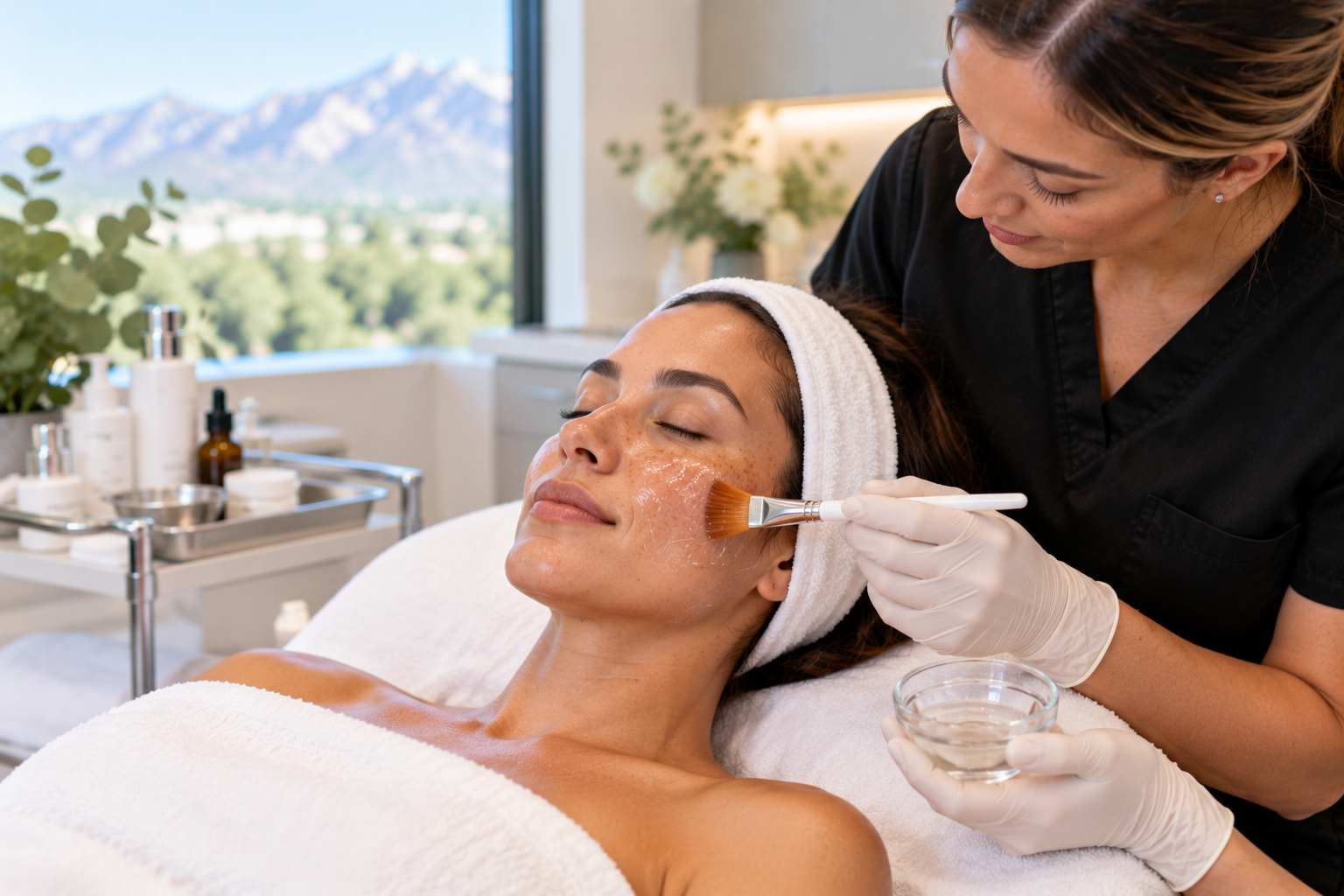
A chemical peel uses a professional-strength acid solution to loosen and remove the outermost layers of skin. As those layers shed, skin cells holding excess pigment are lifted away and replaced by fresher, more even-toned skin. Over a series of treatments, this can soften the look of spots and improve overall brightness.
True Medical Spa offers gentle to medium-depth chemical peels, including the Sensi Peel, PCA Peel, The Perfect Peel, a Jessner peel, and the Vivier Peel. Depending on your skin, formulas may include lactic, salicylic, glycolic, TCA, and kojic acid. The spa's peel menu includes medium-depth options formulated for stubborn hyperpigmentation, including melasma, as well as sun damage.
What you should not expect is a single peel that erases years of pigment. Dark spots typically fade progressively, and your provider will tailor the strength and spacing of treatments to your skin's sensitivity and tone.
Why Is Melasma Harder to Treat Than Sun Spots?
Sun spots are mostly a record of past damage. Melasma is an ongoing tendency. Hormones, heat, visible light, and UV exposure can all keep it active, which is why it often returns even after successful treatment.
The AAD describes chemical peels as one option a dermatologist may add to other melasma treatments to help remove excess pigment, rather than as a standalone cure. That framing is helpful. A realistic melasma plan usually includes a gentle, carefully selected peel series, daily sun protection, and a home skincare routine guided by your provider.
Gentle matters here. Overly aggressive treatment can inflame the skin, and inflammation can trigger more pigment. The AAD also notes that people with darker skin tones can have chemical peels but should work with a provider experienced in treating skin of color, since there is a risk of lasting pigment problems without that expertise.
Which Peel Depth Makes Sense for Pigment?
Peel selection depends on your skin type, the depth of discoloration, and how much downtime you can manage.
Gentle Peels
Mild options like the Sensi Peel are designed as calming choices for first-time peel patients or sensitive skin. They are a sensible starting point for reactive skin or for melasma, where a cautious approach is often best.
Medium-Depth Peels
Medium-depth options such as The Perfect Peel, which combines TCA, salicylic acid, and antioxidants, and the Jessner peel are designed for more stubborn concerns like sun damage and resilient hyperpigmentation. These deliver more noticeable change per session but involve more visible peeling.
What Recovery Looks Like
According to True Medical Spa, there is little downtime, with visible peeling that normally lasts two to four days. Most patients notice a smoother feel and brighter look within days. The AAD's chemical peel FAQs note that healing time varies by depth, from about one to seven days for lighter peels to roughly one to two weeks for medium peels. Aftercare matters just as much as the peel: keep skin hydrated, avoid picking, and wear SPF every day.
How Does Draper's Sun Change the Plan?
Utah's climate makes sun protection non-negotiable for anyone treating pigment. According to the U.S. Environmental Protection Agency, the amount of UV reaching the ground depends partly on altitude, snow reflects the sun's damaging rays, and sun precautions matter even in winter and especially at higher altitudes.
That has two practical implications for Draper residents. First, fall and winter are excellent seasons to start a peel series, since you are typically outdoors less and can more easily protect healing skin. Second, a weekend on the slopes or a sunny hike in Corner Canyon right after a peel can undo progress. Plan peels around your outdoor calendar, and treat broad-spectrum SPF, a wide-brimmed hat, and shade as part of your treatment rather than optional extras.
Who Usually Asks About Peels for Pigment?
The same treatment can serve very different goals.
Women Managing Melasma
Melasma is especially common in women, and hormonal shifts often play a role. The AAD notes melasma may fade once a trigger such as pregnancy is removed, but that is not guaranteed. Many women come in frustrated after trying several products. For them, the priority is a gentle, sustainable plan and honest expectations about maintenance.
Men With Years of Sun Exposure
Men who golf, ski, hunt, or work outdoors often notice sun spots on the cheeks, forehead, or a thinning hairline only after they become numerous. Many men skip daily sunscreen, so a peel series paired with a simple SPF habit can make a visible difference.
Luxury and High-End Clients
Clients who invest in ongoing skin maintenance often fold peels into a seasonal routine alongside other treatments. A peel can be timed to refresh skin before the holiday season or a special event, as long as there is enough time for peeling to finish.
What Other Treatments Might Be Combined With a Peel?
Peels are rarely the only tool. On the spa's hyperpigmentation page, personalized plans may include microneedling, Moxi or BBL laser, chemical peels, and specialized brightening facials, with sessions often spaced four to six weeks apart for steady fading.
For defined sun spots and sun damage, a light-based option like BBL HEROic is designed to address sun damage, age spots, redness, and uneven tone. For melasma specifically, your provider will weigh carefully whether any heat or light-based treatment is appropriate for your skin, since melasma can be sensitive to heat.
Frequently Asked Questions
How many chemical peels does it take to fade sun spots?
It varies with the depth of discoloration and the peel used. The AAD notes lighter peels may be repeated in a series of three to five sessions, and your provider will recommend spacing based on how your skin responds.
Can a chemical peel cure melasma?
No treatment reliably cures melasma. Peels can help lighten patches as part of a broader plan, but sun exposure, heat, and hormonal changes can cause melasma to return, so ongoing maintenance and sun protection matter.
Is a chemical peel safe for darker skin tones?
It can be, with the right provider. The AAD recommends people with skin of color work with a provider experienced in peels for darker skin because of the risk of pigment changes.
When is the best time of year to get a chemical peel in Utah?
Fall and winter are popular because many people spend less time in direct sun. Still, Utah's altitude and snow reflection mean sunscreen is essential year-round.
How long does peeling last after a chemical peel?
At True Medical Spa, visible peeling normally lasts two to four days, with a smoother feel and brighter look appearing within days.
Spot the Difference, Then Treat It
Dark spots are not all the same, and treating them well starts with knowing what you are looking at. Sun spots often respond beautifully to a thoughtful peel series. Melasma asks for more patience and a gentler hand. In both cases, sun protection does half the work.
To learn more about the spa's approach to skin health, visit the True Medical Spa homepage, or schedule a consultation in Draper to have your pigment assessed and get a peel plan matched to your skin.