Why Does Skin Start to Feel Loose? Understanding Skin Laxity Before You Try to Fix It

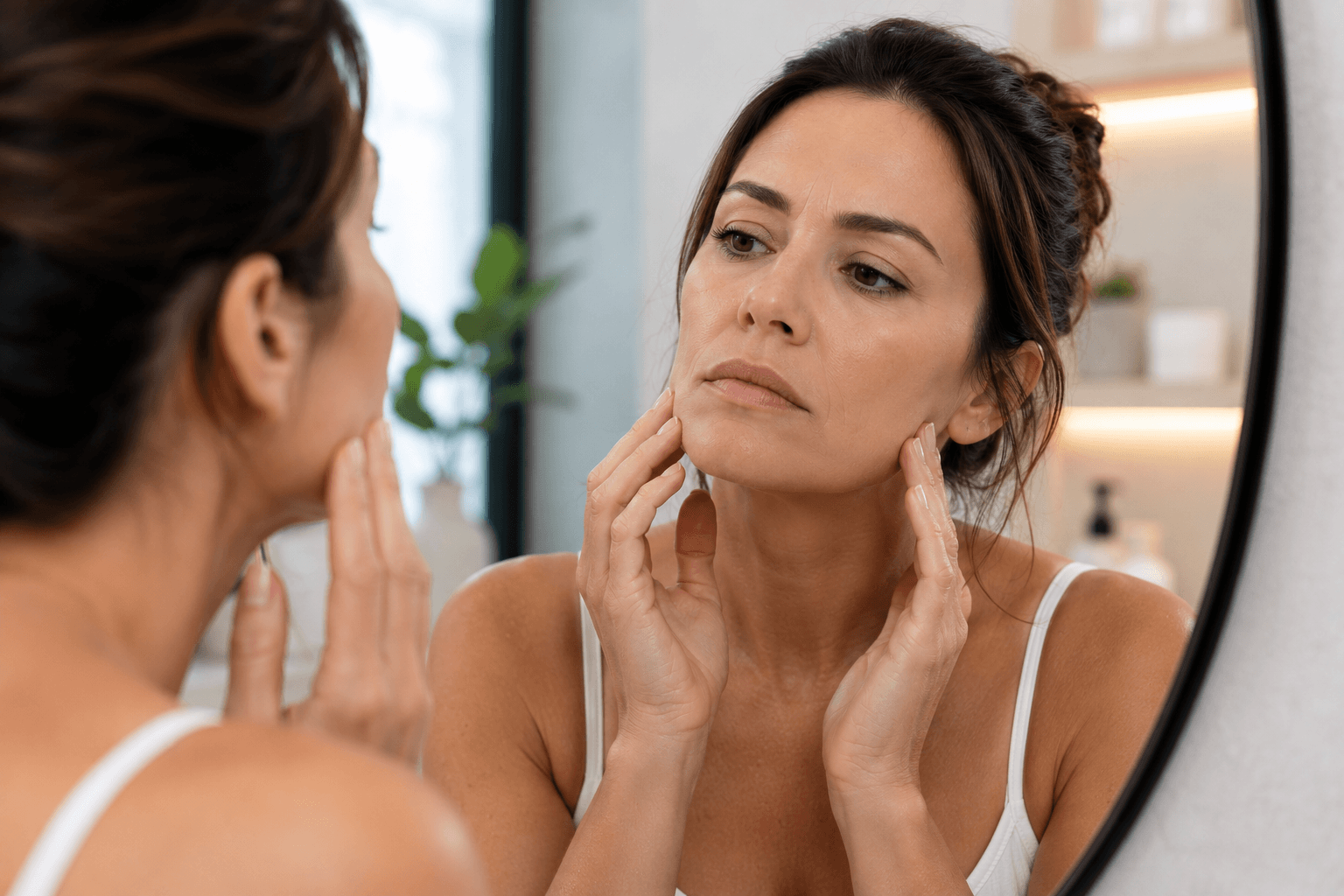
There is a particular moment a lot of people describe almost the same way. They are looking in the mirror, maybe turning their head slightly, and they notice their skin does not snap back the way it used to. It is not a wrinkle exactly. It is more like the skin itself has lost some of its bounce. Along the jawline, under the chin, around the cheeks, things just feel a little softer and looser than they remember.
That sensation has a name. It is called skin laxity, and it is one of the most common concerns we hear about at True Medical Spa from clients in Draper who are not quite sure what to call what they are seeing. Before jumping into treatment options, it helps to understand what is actually happening underneath the surface.
What Causes Skin Laxity as We Age?
Skin gets its firmness primarily from two proteins, collagen and elastin, both of which are produced in the deeper layers of the skin. Collagen provides structure, while elastin allows skin to stretch and return to its original shape. Starting in our mid to late twenties, the body's natural production of both begins to slow, and that decline accelerates through our thirties, forties, and beyond.
Is Skin Laxity the Same as Wrinkles?
Not exactly, and this distinction matters when deciding on treatment. Wrinkles are typically lines that form from repeated facial movement or the breakdown of skin in specific creased areas. Skin laxity refers more broadly to a loss of tightness and elasticity across a wider area, which is why it often shows up as sagging along the jawline or looseness under the chin rather than a single defined line.
What Other Factors Speed Up Skin Laxity?
Sun exposure is one of the biggest accelerators, since ultraviolet light breaks down collagen and elastin fibers over time, a process dermatologists refer to as photoaging. Genetics also play a role in how quickly someone's skin loses elasticity. Weight fluctuations can contribute as well, since skin that has been stretched and then loses that underlying volume does not always retract fully on its own.
What Are the Common Signs of Skin Laxity?
Skin laxity tends to show up gradually rather than overnight, which is part of why it can be hard to pinpoint exactly when it started.
Where Does Skin Laxity Usually Show Up First?
The jawline and the area under the chin are among the earliest and most noticeable places, since they are constantly visible and affected by gravity. Many people also notice looseness along the neck and décolletage, or a general softening in the texture and firmness of the cheeks.
Can Skin Laxity Affect More Than Just the Face?
Yes. While facial laxity gets the most attention, similar changes happen on the body, particularly on the abdomen, upper arms, and inner thighs, especially after weight changes or pregnancy.
Can Skincare Products Improve Skin Laxity?
Topical products containing retinoids, peptides, and antioxidants can support collagen production over time and are a reasonable part of a long term skincare routine. However, most topical treatments only affect the outermost layers of skin and have limited ability to reach the deeper structural layers where laxity actually originates. For mild concerns or as a preventive measure, skincare can help. For more noticeable laxity, it is generally not enough on its own.
How Does Morpheus8 Address Skin Laxity?
This is where a treatment like Morpheus8 becomes relevant, since it is specifically designed to work at the deeper layers where collagen and elastin are produced.
What Is Morpheus8 and How Does It Work?
Morpheus8 combines microneedling with radiofrequency energy. The microneedles create controlled micro-injuries in the skin while the radiofrequency energy delivers heat to deeper tissue layers, stimulating the body's natural collagen and elastin production. Because it reaches deeper than surface level treatments, it is often used specifically to address skin laxity rather than just texture or tone.
Can Morpheus8 Be Used on the Body as Well as the Face?
Yes. There is a dedicated version, Morpheus8 Body, designed for areas like the abdomen, arms, and thighs where skin laxity is common after weight changes or as a natural part of aging.
What Areas Does Morpheus8 Typically Target?
The jawline and under chin area, along with the cheeks and neck, are among the most requested treatment zones. These correspond closely with the areas covered under jawline and décolletage concerns, which tend to show early signs of laxity before other parts of the face.
Who Is a Good Candidate for Morpheus8?
Morpheus8 tends to work best for people with mild to moderate skin laxity who are not quite at the point of wanting a surgical solution, but who want more than what topical skincare alone can offer. This often includes people in their thirties through sixties, though the appropriate approach depends on the degree of laxity present. It is also frequently paired with other concerns, since many people dealing with laxity are simultaneously noticing loose or sagging skin or uneven texture. A consultation is the best way to determine whether Morpheus8 alone addresses your specific concern or whether it makes sense alongside another treatment.
What Does Recovery From Morpheus8 Look Like?
Downtime is generally shorter than surgical alternatives. Most people experience redness and mild swelling for a few days following treatment, similar to a moderate sunburn, with some pinpoint scabbing possible as the skin heals. Results build gradually over the following weeks and months as new collagen forms, rather than appearing all at once. Most treatment plans involve a series of sessions spaced several weeks apart for optimal results.
Loose Skin, Tight Deadline? Here's What Actually Helps
Skin laxity is not a flaw and it is not something that happened because you did anything wrong. It is simply what collagen decline looks like once it becomes visible, and it is one of the more common concerns that brings people into a med spa for the first time. The encouraging part is that this particular concern has a well established, non surgical treatment path that works with your skin's own repair process rather than around it.
If you are in Draper and have been noticing that your skin does not feel as firm as it used to, our team at True Medical Spa can help you understand what is happening and whether Morpheus8 is the right fit. Explore our full list of services or reach out to schedule a consultation to talk through your specific concerns.
This article was updated in August 2026 to reflect current treatment approaches and information.
Frequently Asked Questions
What is the difference between skin laxity and sagging skin? They are closely related terms. Skin laxity refers to the loss of elasticity that causes skin to sag, stretch, or feel less firm over time.
How many Morpheus8 sessions are usually needed? Most treatment plans involve a series of three to four sessions spaced about four to six weeks apart, though this varies based on individual goals and the area being treated.
Is Morpheus8 painful? A topical numbing agent is typically applied before treatment, and most people describe the sensation as mild heat or pressure rather than significant pain.
Can Morpheus8 help with acne scarring in addition to skin laxity? Because it combines microneedling with radiofrequency, Morpheus8 can improve overall skin texture, which may benefit some types of scarring alongside laxity concerns.
How soon will I see results from Morpheus8? Some initial improvement in skin tightness can appear within a few weeks, with fuller results developing over two to three months as new collagen builds.